Introduction
In many construction and landscaping projects, engineers and buyers face the same challenge: how to achieve strong structural support while keeping costs low and installation simple. Traditional concrete solutions are often expensive, time-consuming, and difficult to maintain. This is where gabion mesh becomes a practical alternative. It offers durability, flexibility, and natural drainage, making it widely used in both civil engineering and decorative landscaping projects.
What Is gabion mesh
Gabion mesh is a type of steel wire mesh used to form containers that are filled with stones or other materials. These containers are known as gabion, gabion basket, gabion box, or gabion cage, depending on their shape and application.
From an engineering perspective, gabion mesh functions as a flexible retaining structure. It allows water to pass through while holding soil and rocks in place. Compared to rigid structures, it adapts better to ground movement and reduces the risk of cracking or failure.
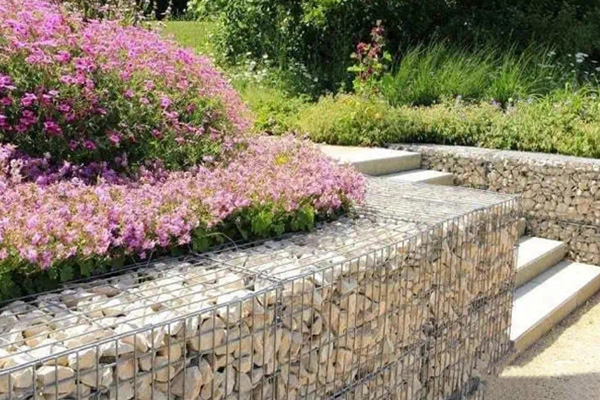
In modern projects, welded gabion systems are also widely used for landscaping due to their clean appearance and easy installation.
Types of gabion mesh
gabion
This is the general term used to describe all stone-filled wire structures. It can be applied in slope protection, riverbank reinforcement, and road support systems.
gabion box
Gabion box refers to rectangular units commonly used in retaining walls and structural support. They are stacked to create strong and stable walls.
gabion basket
Gabion basket is often used in large-scale engineering projects such as river training and erosion control. It is typically made from hexagonal wire mesh for flexibility.
gabion mesh Materials
PVC
PVC-coated gabion mesh provides excellent corrosion resistance, especially in humid, coastal, or chemical environments. The coating protects the steel wire from rust and extends service life significantly.
PP
PP (polypropylene) materials are sometimes used in specific applications where lightweight and chemical resistance are required. Although less common than PVC, PP can offer additional durability in aggressive environments.
Performance and Efficiency
The performance of gabion mesh is one of its biggest advantages. Unlike rigid concrete structures, gabion systems are permeable. This means water can flow through the structure, reducing hydrostatic pressure and preventing damage.
Another key benefit is flexibility. When the ground shifts slightly due to settlement or environmental changes, gabion structures can adjust without cracking. This greatly reduces maintenance costs over time.
From a cost-efficiency perspective, gabion systems require less skilled labor and no heavy machinery for installation. Materials such as stones are often locally available, further reducing project costs.
In landscaping applications, welded gabion provides a modern and clean appearance, making it suitable for decorative gabion wall systems in residential and commercial spaces.
How to Choose gabion mesh
Choosing the right gabion mesh depends on several key factors:
1. Application: Determine whether the project is structural or decorative. Engineering projects require stronger wire and larger mesh sizes.
2. Environment: For coastal or humid regions, PVC-coated mesh is recommended for better corrosion resistance.
3. Load requirements: Retaining walls and slope protection require higher tensile strength compared to decorative gabion cages.
4. Mesh type: Use hexagonal mesh for flexibility and welded mesh for appearance and rigidity.
5. Installation conditions: Consider accessibility, labor availability, and foundation conditions before selecting the product.
Common Problems
Clogging
Over time, fine soil particles may accumulate inside the gabion structure, reducing permeability. Proper stone grading can help minimize this issue.
Scaling
In water-related projects, mineral deposits may build up on the mesh surface. While this usually does not affect performance, it can impact appearance.
Aging
Exposure to harsh environmental conditions may lead to coating degradation. Using high-quality galvanized or PVC-coated mesh can significantly extend lifespan.
Maintenance Tips
Gabion systems are known for low maintenance, but regular inspection is still recommended:
- Check for wire damage or corrosion
- Replace broken sections promptly
- Ensure proper drainage is maintained
- Remove excessive vegetation if necessary
- Monitor structural stability in high-load areas
Real Engineering Experience
Case 1: Riverbank Protection in Southeast Asia
A project used gabion baskets to stabilize riverbanks during heavy rainfall seasons. The permeability of the structure allowed water flow while preventing soil erosion.
Case 2: Highway Slope Stabilization in the Middle East
Gabion boxes were installed along highway slopes to prevent landslides. The flexibility of the system helped adapt to temperature variations and ground movement.
Case 3: Urban Landscape Design in Japan
Welded gabion cages were used to create decorative retaining walls in a public park. The combination of stone and steel provided both structural support and aesthetic value.
Conclusion
Gabion mesh is a versatile solution that meets both engineering and decorative needs. It provides strength, flexibility, and cost efficiency, making it suitable for a wide range of applications. Whether used in large infrastructure projects or small garden designs, gabion systems continue to prove their value in modern construction.
If you are looking for a reliable and long-lasting solution, choosing the right gabion mesh based on your project requirements will ensure optimal performance and durability.
FAQ
What is the lifespan of gabion mesh
High-quality galvanized or PVC-coated gabion mesh can last 10 to 30 years depending on environmental conditions.
Is gabion mesh suitable for coastal areas
Yes, but PVC-coated mesh is recommended for better corrosion resistance.
What type of stone is best for gabion filling
Hard and durable stones such as granite or basalt are ideal for long-term performance.
Can gabion structures be used for decoration
Yes, welded gabion cages are widely used in modern landscaping for decorative walls and garden features.
Is installation difficult
No, gabion systems are relatively easy to install and do not require specialized equipment.
2026-6-11